
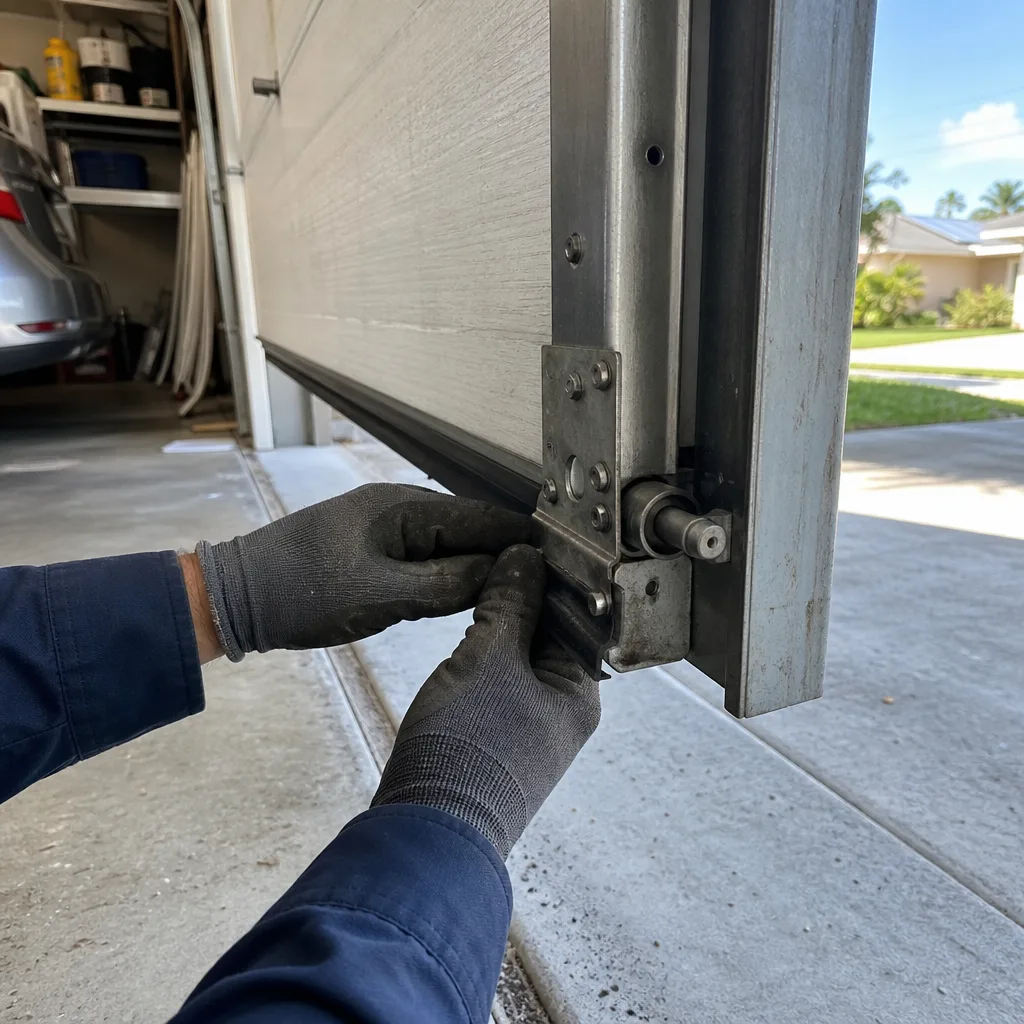
Last updated November 21, 2026
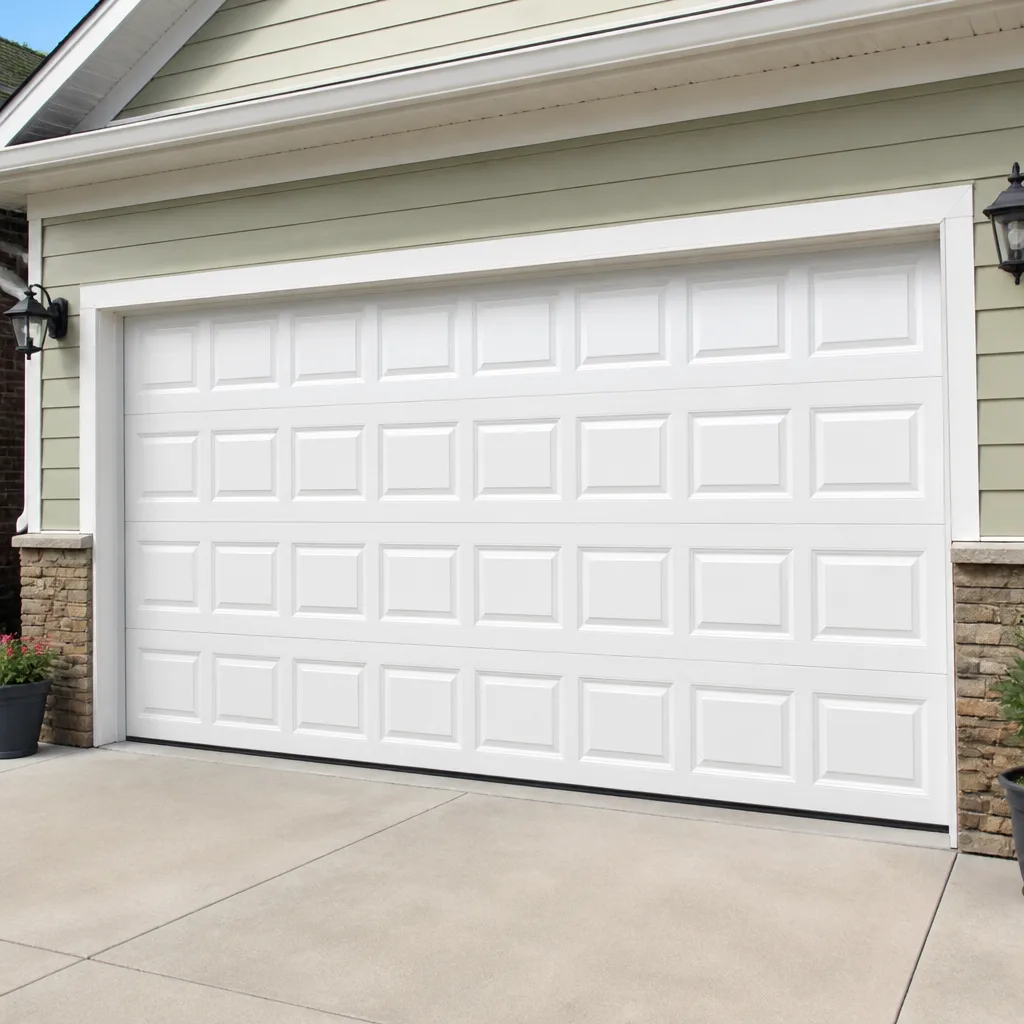 Raised-panel steel
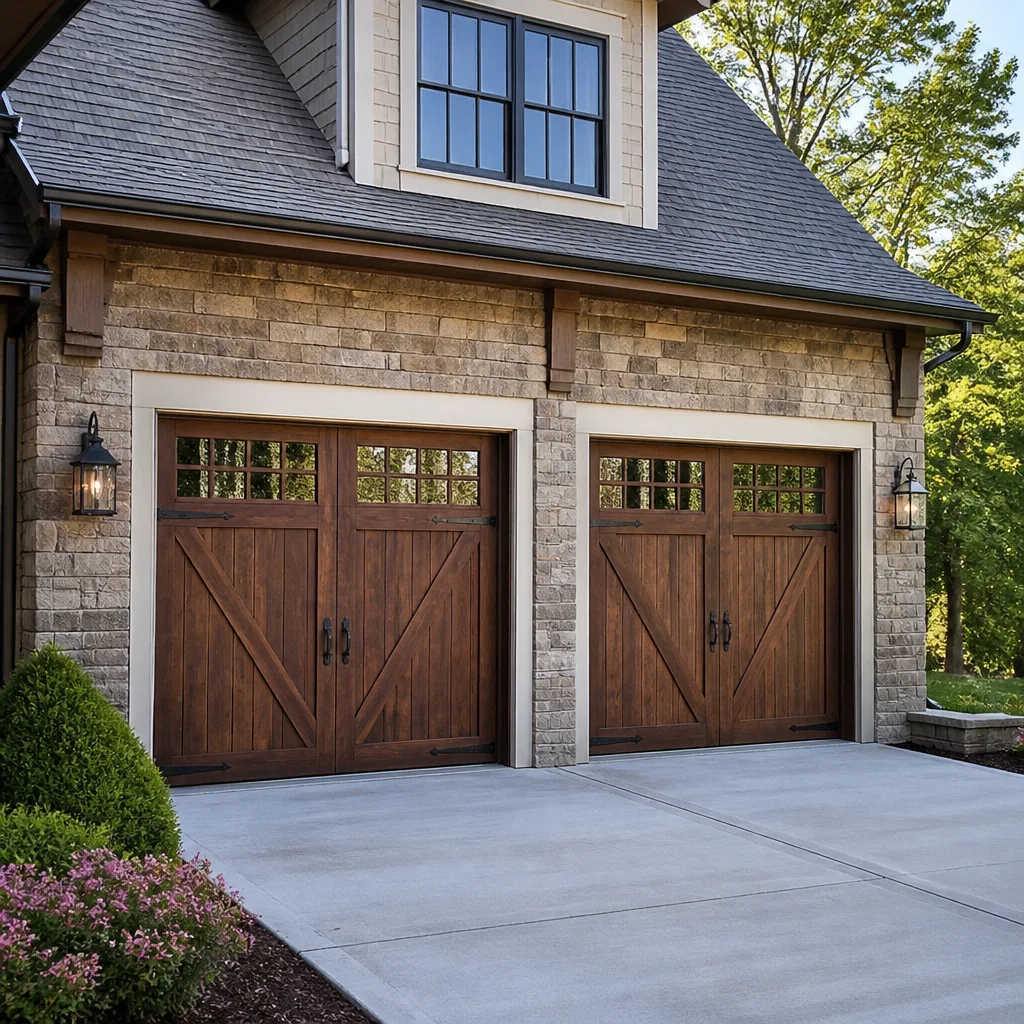 Carriage house
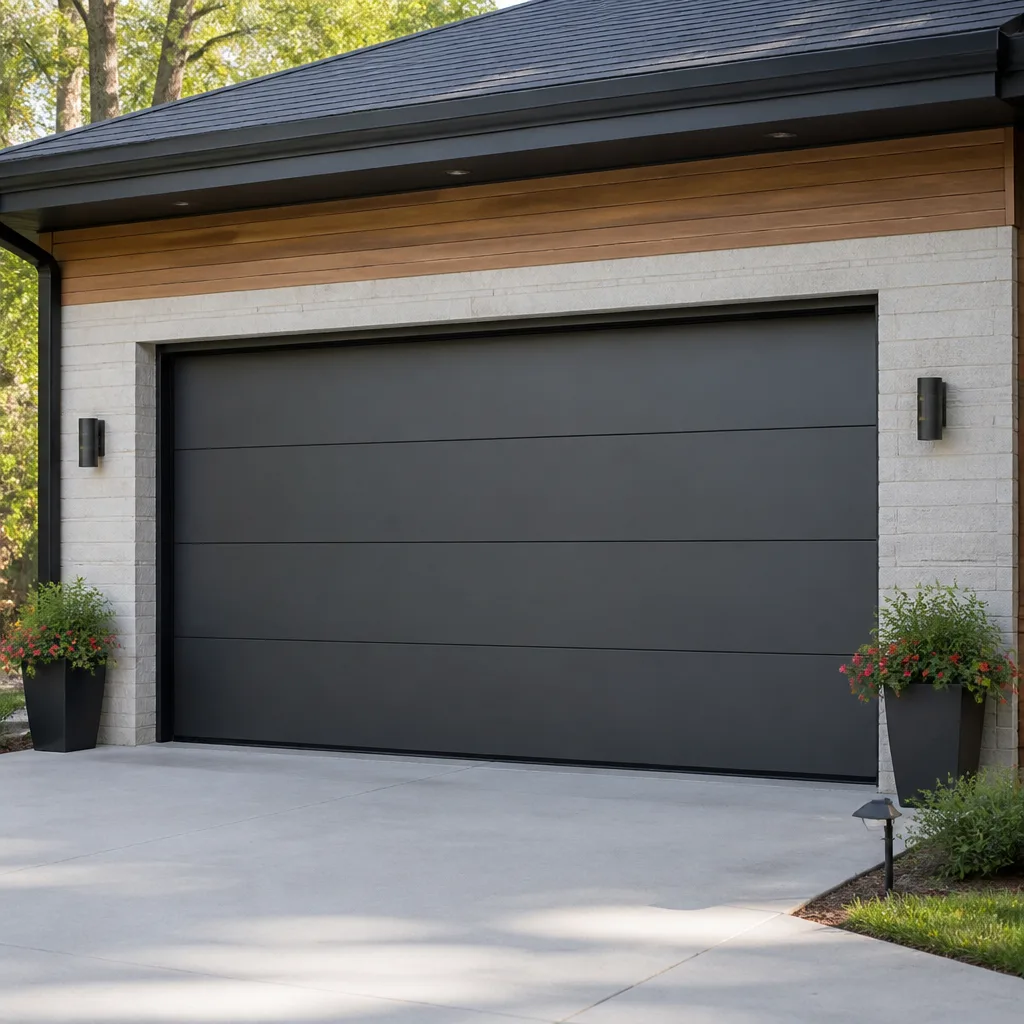 Modern flush
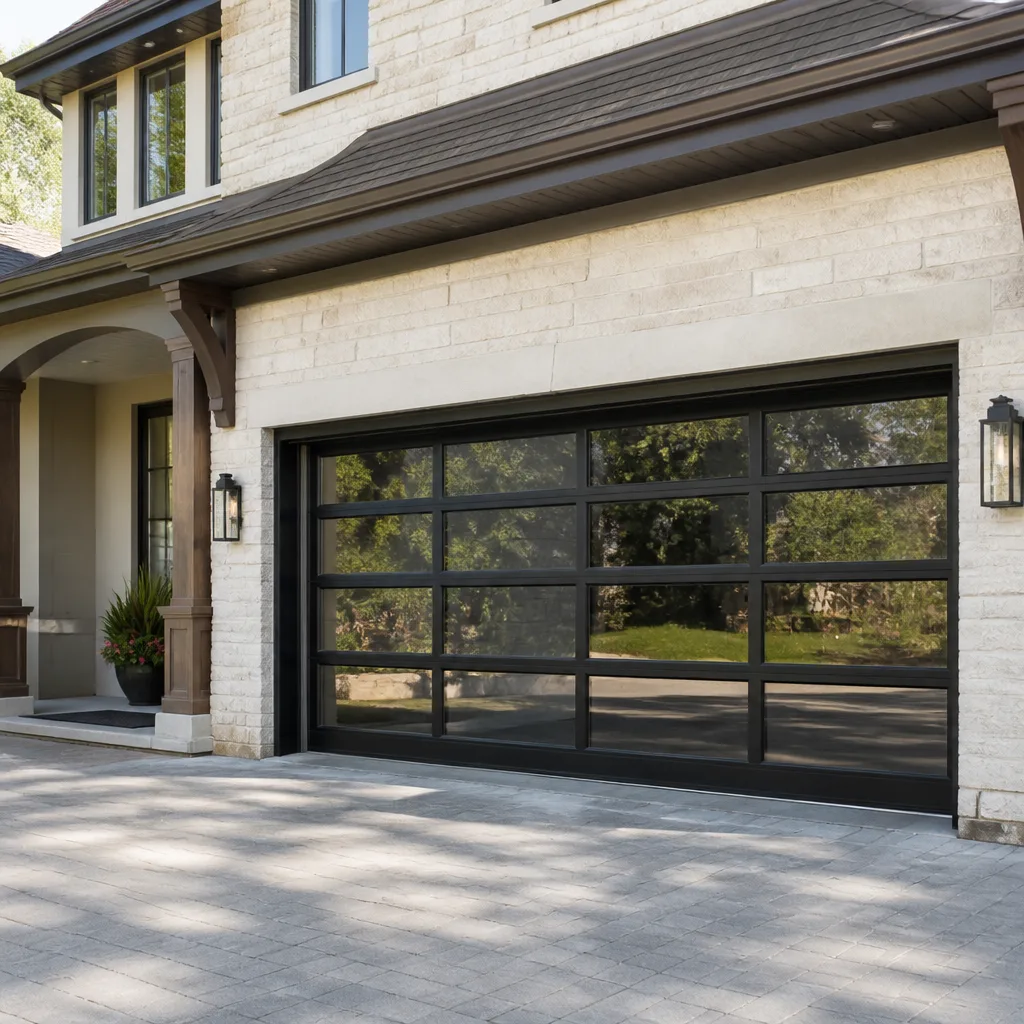 Full-view glass
 LiftMaster openers
 Chamberlain openers
Full 25-point door and opener safety check with every visit - springs, cables, rollers, tracks, and your LiftMaster or Chamberlain opener included
You get a price before we start. It does not change when the pro arrives.
Get your free estimateGarage Door Warning Signs: A Hialeah Homeowner’s Reference Guide
Most garage door warning sign articles tell you what you already know: the door won’t open, the door won’t close, the door makes a noise. That’s the list you read after something has already failed. This guide is about the earlier signals, the small changes a trained ear and eye catch months before a spring snaps or a cable lets go. A door that hesitates for half a second before it moves is not warming up. It’s telling you something. In Hialeah‘s heat and humidity, that half-second pause is often the first audible symptom of spring fatigue, and it tends to show up well before a total failure. We’ll walk through the sound profiles, the gap at the floor, the opener’s force drift, the rust patterns that matter and the ones that don’t, and how to read each one. What you learn here can help you plan a repair instead of paying for an emergency.
Quick Answer
The earliest garage door warning signs in Hialeah are a half-second hesitation before the door moves, a grinding or popping sound that wasn’t there six months ago, a bottom seal that no longer sits flat across the floor, an opener that needs more force to lift the door, and remote or keypad dropouts that start intermittent and stay that way. Each one points to a specific component wearing out, and catching it early usually means a repair rather than a replacement.
Styles & brands we work with
- Raised-panel steel
- Carriage house
- Modern flush
- Full-view glass
- LiftMaster openers
- Chamberlain openers
Table of Contents
- What the Sound of Your Door Tells You
- Why the Gap at the Bottom Seal Matters More Than You Think
- Reading Opener Force Adjustment Drift
- Rust vs. Structural Corrosion in Springs and Cables
- Remote and Keypad Inconsistency as an Early Warning
- How Hialeah’s Heat Accelerates Wear
- A Monthly Inspection Checklist You Can Actually Do
- When to Call a Professional
What the Sound of Your Door Tells You
Every moving part in a garage door system has a sound. When a component starts to fail, it usually changes pitch, rhythm, or volume before it stops working entirely. The trick is knowing which sound belongs to which part. These are the three we hear most often in Hialeah, and what each one points to.
A cable beginning to fray
A fraying cable produces a rhythmic ticking or snapping sound, usually once per drum rotation. It’s sharp, metallic, and it comes and goes as the door travels. You might hear it at the same spot on the track every cycle. That periodic quality is the tell: a strand has broken inside the cable and is slapping against the drum or itself. Do not ignore this one. A cable under tension can release suddenly with serious injury risk, so keep the door closed and keep people away from the tracks until a technician sees it.
A roller losing its bearing
This is a low, grinding rumble that sounds like a shopping cart with a bad wheel. It’s constant while the door moves, and it may quiet down when the door is stationary. Rollers wear fastest on doors that cycle frequently, and the grind you hear is metal-on-metal inside the bearing housing. Ten rollers, one bad bearing: the door sounds worse than it is, but a seized roller will start wearing a groove into the track if it’s left alone.
A torsion spring approaching end-of-life
A spring doesn’t usually announce itself with one loud crack until it breaks. Before that, you may hear a creak, a groan, or a high-pitched chirp that syncs with the door’s rise and fall. It’s the sound of a coil losing its tempered tension and binding slightly as it winds. In Hialeah, where summer heat sits on the springs in an attached garage, this stage passes more quickly than it might in a cooler climate. When you hear it, have the springs checked; that’s our garage door spring repair work, and we’d rather catch it before it breaks.
One practical habit: step into the garage while someone runs the door, and close your eyes for one full cycle. Listen. If you can describe the sound in a word (“tick,” “grind,” “creak”), you can probably describe it to a technician and get a straight answer.
Why the Gap at the Bottom Seal Matters More Than You Think
A homeowner sees daylight under the garage door and thinks one thing: the seal is worn out, replace it. Sometimes that’s true. But in Hialeah, an uneven gap at the bottom seal often isn’t a seal problem at all. It’s a sign the door is no longer parallel to the floor, and that can mean foundation settling or header sag.
Hialeah is built on soil that shifts with wet and dry seasons, and a garage slab can settle unevenly over years. When the slab or the door opening moves, the door follows. Here’s how to tell what you’re looking at:
- Gap is uniform all the way across: usually just seal wear or compression. A new seal is straightforward.
- Gap varies from one side to the other: the door is out of level or the track is out of alignment. Often points to settling or track movement.
- Gap appears or disappears with the seasons: the floor or header is moving with moisture. Worth having the opening checked.
- Gap is centered, with the door bowing: the door panel may be warped, common in older wood and some composite doors in high humidity.
If you’re seeing a gap that varies from side to side, ask a technician to check the door’s level and the track alignment, not just swap the seal. The wrong fix here is a new seal that compresses for a month and leaks again by summer. A garage door repair visit should start with measurements, not parts. That’s what tells you whether the problem is the seal or the structure behind it.
Reading Opener Force Adjustment Drift
Your garage door opener measures how much force it takes to move the door, and it has a safety threshold programmed into it. When the door starts needing more force than it did six months ago, the opener isn’t necessarily failing. More often, the door itself is getting harder to move, and the opener is compensating. That drift is one of the most reliable early warning signs there is, and it’s also one of the easiest to miss.
Here’s how to spot force drift in a LiftMaster, Chamberlain, or Genie system:
- Watch the start. If the door lurches briefly before moving smoothly, the opener is starting against more resistance than it expects.
- Listen at the reversal test. Put a small object under the door and let it close. If the opener barely reverses or reverses too hard, the force setting and the actual door load are out of sync.
- Note any need to “help” the door. If the door only completes its cycle when you’re there watching, or if it stops partway and reverses on its own, the force limit is being hit. That’s a safety feature doing its job, and a sign the door is binding.
What’s actually wearing? Usually rollers, hinges, or a torsion spring losing tension. Sometimes it’s the track, bent or pushed out of alignment by a car bumper or a settled slab. The opener is the symptom, not the cause. If a Wi-Fi-enabled LiftMaster or older Chamberlain unit is doing this, we can likely repair the opener and the door hardware instead of replacing the unit. Opener repair is garage door opener repair in the honest sense: find the resistance, fix it, then reset the force profile.
Rust vs. Structural Corrosion in Springs and Cables
Not all rust is a problem. Hialeah garages hold humidity, and a little surface oxidation on a door panel or a hinge is cosmetic. The rust that matters is the rust on the load-bearing parts: the springs and cables. And the pattern tells you which is which.
Surface oxidation (usually not urgent)
A fine, even orange film on painted steel panels, or light rust flecks on hinge faces, is superficial. It wipes off with a cloth and hasn’t eaten into the metal’s thickness. On a painted or powder-coated panel it’s mostly a maintenance issue. Clean it, and the metal is fine underneath.
Structural corrosion (dangerous)
Look at the springs and cables themselves. Warning patterns include:
- Pitting on a spring coil: small craters where metal is missing. That’s a spring losing its thickness and its rated strength.
- Rust creeping into the coil gap: oxidation inside the wound coils means that section of the spring is being eaten from the inside.
- Brown staining on the cable strands: rust working into the lay of the cable, not just on the surface. This is where cable failure starts.
- Flaking or scaling on the drum or end plate: metal is coming off in sheets. Structural corrosion.
If you see any of these, don’t run the door more than necessary, and keep people away from the springs while it’s raised or lowered. Springs and cables are the most dangerous parts of any garage door system, and they can release stored energy without warning. We advise against touching or adjusting them. A technician can measure corrosion visually and by feel and tell you whether the component is in its service window or past it. The rust pattern is one of the main things we look at as part of Garage Door Repair Hialeah Pros.
Remote and Keypad Inconsistency as an Early Warning
A remote that works one morning and not the next, or a keypad that opens the door from the driveway but not from the car, is easy to write off. Replace the battery, right? Sometimes. But consistent inconsistency, a pattern that stays the same for weeks, is one of the most underrated garage door warning signs. It usually points to one of two causes, and they need different fixes.
UV damage to the antenna or receiver wire
The antenna on a garage door opener is a thin wire, often hanging from the back of the unit or routed along the ceiling. In a Hialeah garage, where summer UV through a window or an open door can cook a wire for years, that antenna degrades: it loses insulation, becomes brittle, or breaks at the connector. The symptom is a short, predictable range. The remote works from ten feet but not from the driveway. The keypad works from outside but not from the car. That’s antenna coverage, not electronics.
A failing logic board
If the range issue comes with other quirks, like the door opening on its own, a single remote that’s dead while others work, or a short beeping or clicking sound from the head unit, the logic board is the more likely culprit. On older Craftsman and Genie units, this is where a technician earns their fee: many shops won’t service legacy boards, but it’s a real repair and often cheaper than a new opener.
One thing to rule out first: check the remote battery and re-pair the remote to the opener. If that fixes it, great. If you’ve done it twice and the inconsistency remains, the antenna or the board needs a look. We service both modern Wi-Fi openers and legacy systems, and the diagnostic is usually quick. If the board is done, we’ll tell you; if it’s the antenna, it’s a minor fix.
How Hialeah’s Heat Accelerates Wear
Garage door systems wear at a rate your climate decides. In Hialeah, the combination of year-round warmth and high humidity presses on the load-bearing components harder than in cooler, drier places. If you’ve moved here from further north, the wear calendar on your door is shorter than you’re used to, and that’s worth knowing when you’re trying to predict when something will fail.
The main effects are consistent across Hialeah:
- Springs fatigue faster in heat. Tempered steel loses tension with thermal cycling, and a closed garage in summer heat gets hot enough to contribute. A spring’s service window can be shorter than the manufacturer’s general guidance.
- Lubricants break down. Grease on the tracks, rollers, and hinges thins faster in the heat. Dry tracks and rollers mean more friction, which means more load on the opener and springs.
- Humidity drives corrosion. Springs and cables are the load-bearing parts, and they’re the first to show rust pitting. That’s not dust; it’s the beginning of structural corrosion.
- Wood and composite doors absorb moisture. Old wood panels in Hialeah garages swell and warp, which pushes the door out of square and shows up as that gap at the bottom seal.
- Seals harden. Rubber seals stiffen more quickly in heat, and a seal that no longer compresses is a seal that leaks water into the garage.
The practical consequence: check your door about twice as often as the general advice suggests. If you’re in Hialeah and you’re wondering whether a warning sign is “just the climate,” the answer is often that the climate is exactly why it’s telling you something. Neighbors in Miami Springs, Hialeah Gardens, and Miami Lakes face the same calendar. It’s not unique to any one street, and it’s not your door being dramatic. It’s heat doing what heat does to metal and rubber over years.
A Monthly Inspection Checklist You Can Actually Do
You don’t need to be a technician to catch early warning signs. You need fifteen minutes once a month and the discipline to actually do it. Here’s a checklist you can run yourself. It’s designed to catch the signs before they become emergencies, without asking you to touch the dangerous parts.
- Look at the door. Are the panels straight? Is the gap at the bottom even? Does the door sit square in the opening? Note any changes from last month.
- Look at the springs and cables. Don’t touch them. From a distance, note rust patterns, frayed strands at the drums, or sagging. If you see any, that’s a call, not a checklist item.
- Run the door and listen. One full cycle up, one full cycle down. Close your eyes. Note the sounds. New tick? New grind? New creak? Write it down and track whether it changes.
- Test the reversal. Put a small object (a roll of paper towels works) under the door and let it close. The door should reverse immediately. If it won’t reverse, or barely reverses, the opener force or safety sensor is out of adjustment. Don’t use the door until a technician checks it.
- Pull the emergency release. From the closed position, pull the release cord. The door should open by hand with moderate effort, and it should be able to stop and stay put at the midpoint. If it drops or feels far too heavy, the spring tension is wrong.
- Test each remote and the keypad. Note the range from each one. If any of them is shrinking, follow up.
- Look at the tracks. Any visible bend, loose bracket, or dent from a car? Note it.
- Check the lubrication. Tracks and hinges should be lightly greased. Dry is not fine. (Skip the springs: they should not be lubricated by you.)
Keep a short log: date, what you heard, what you saw, what you tested. Next month, run it again. Two or three entries that point in the same direction are worth a phone call. A one-off tick that goes away, less so. This is how a technician reads a door, and it works just as well for a homeowner.
See the difference
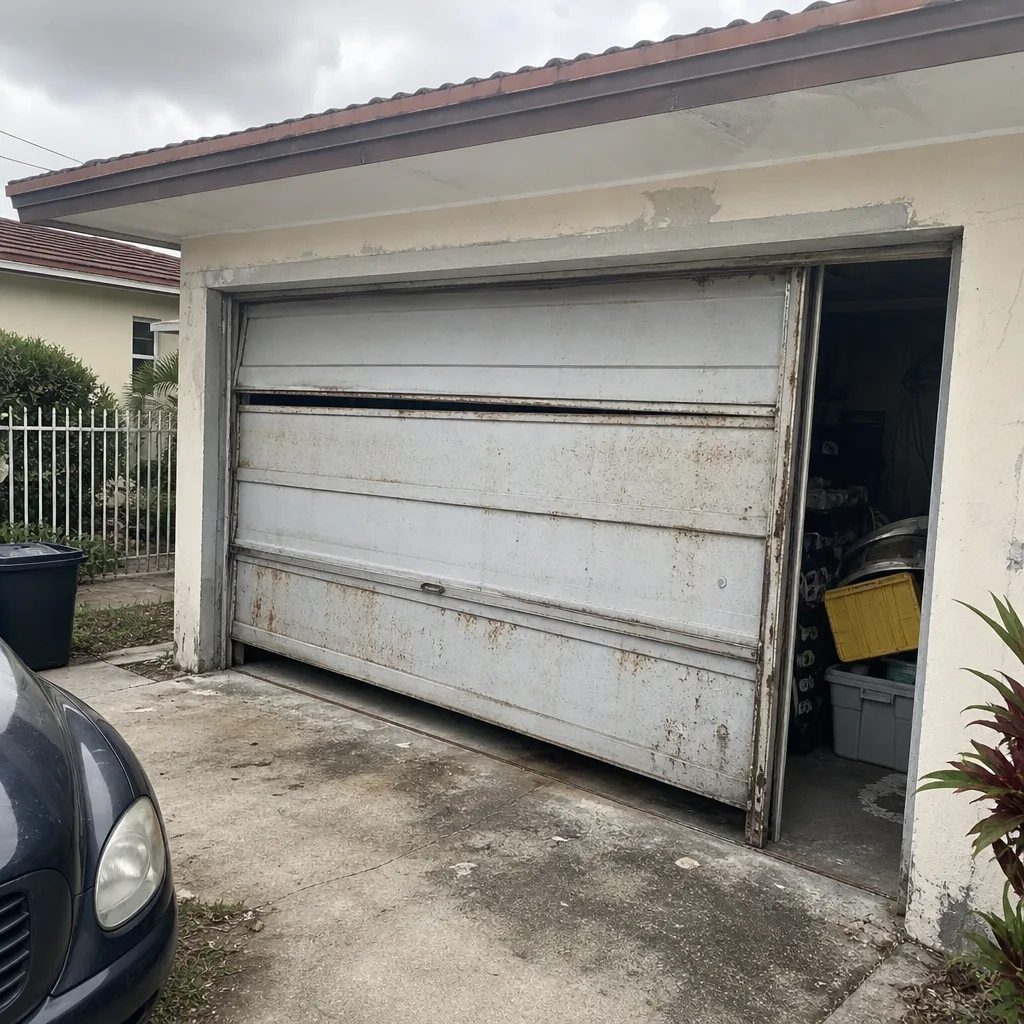 Before
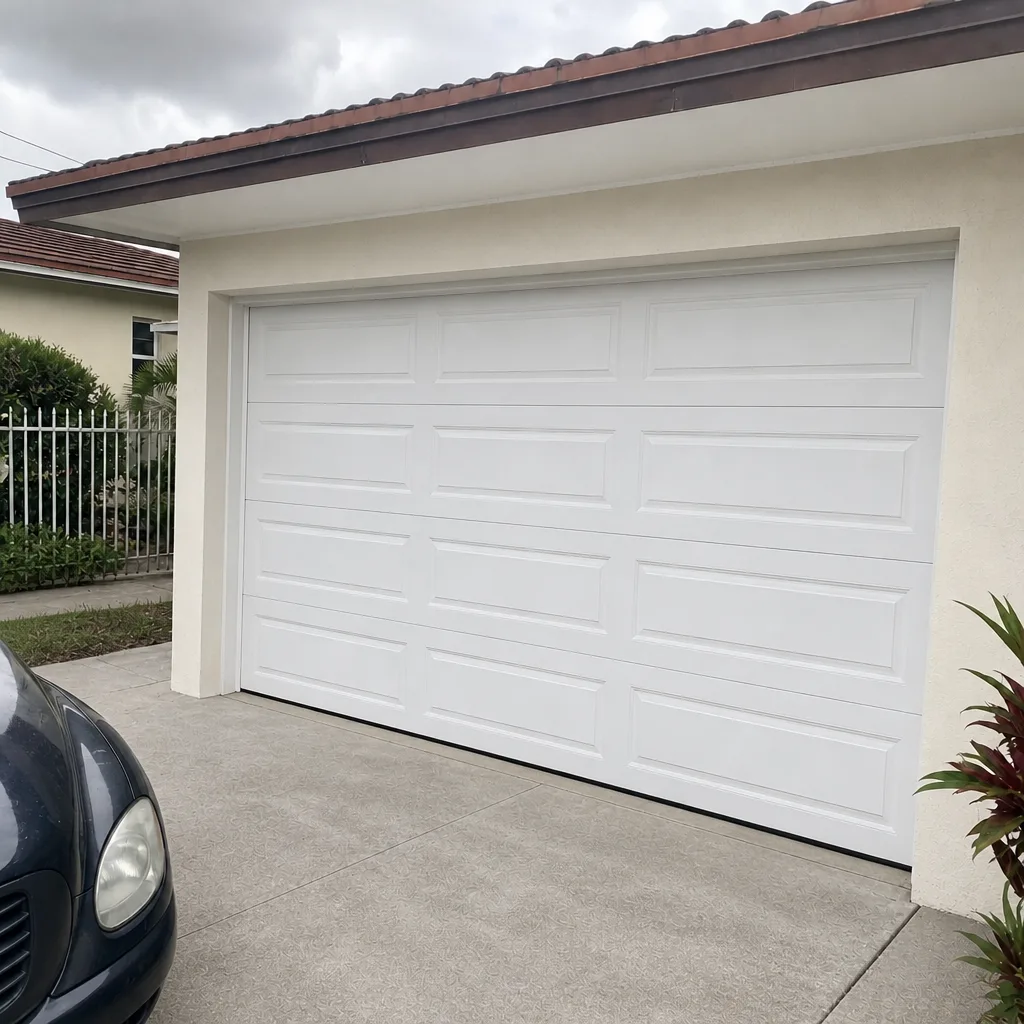 After
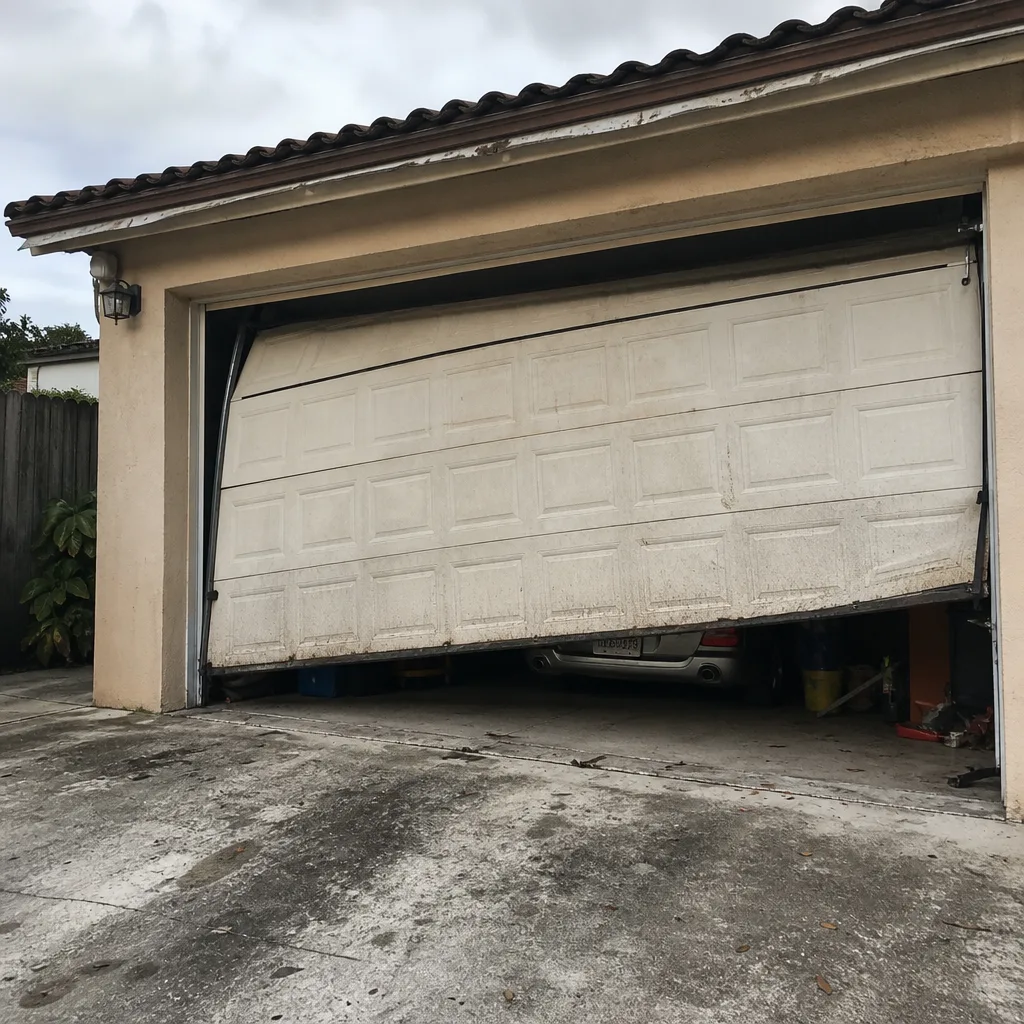 Before
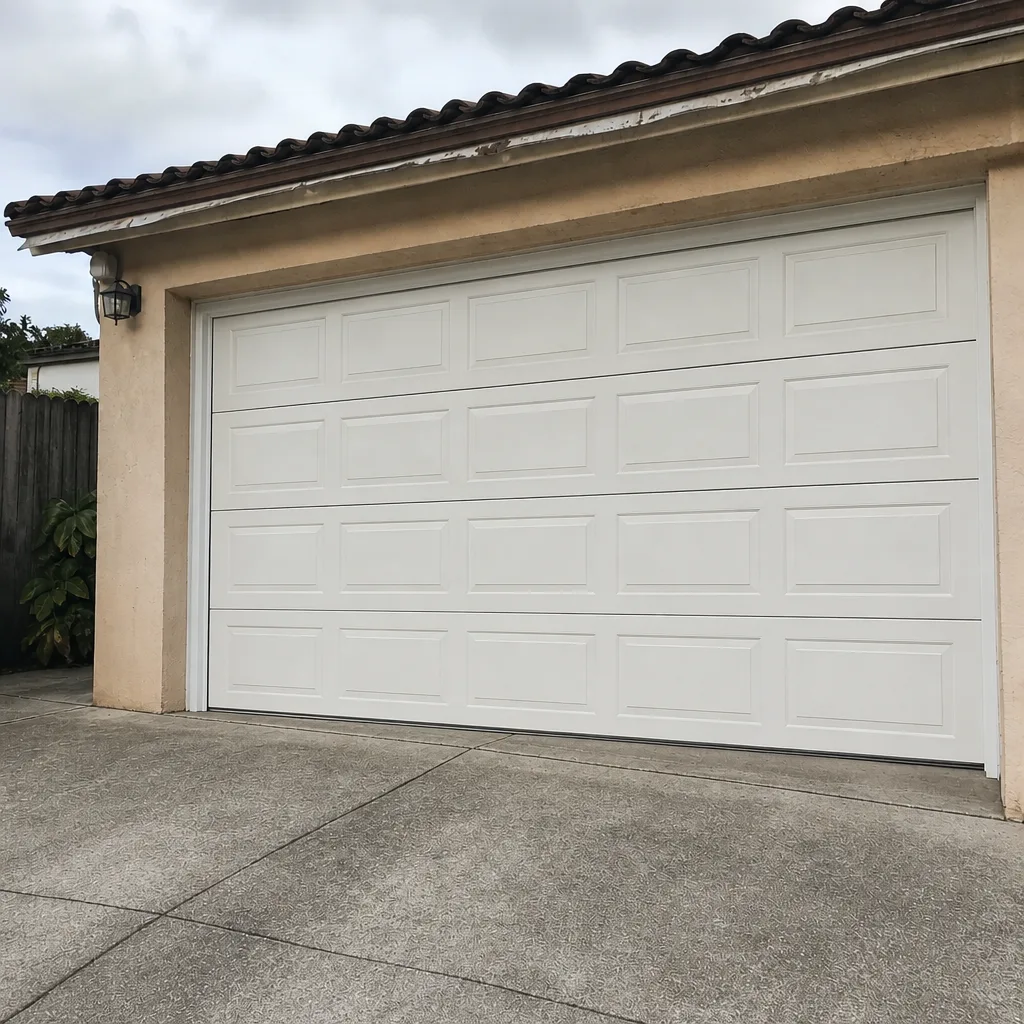 After
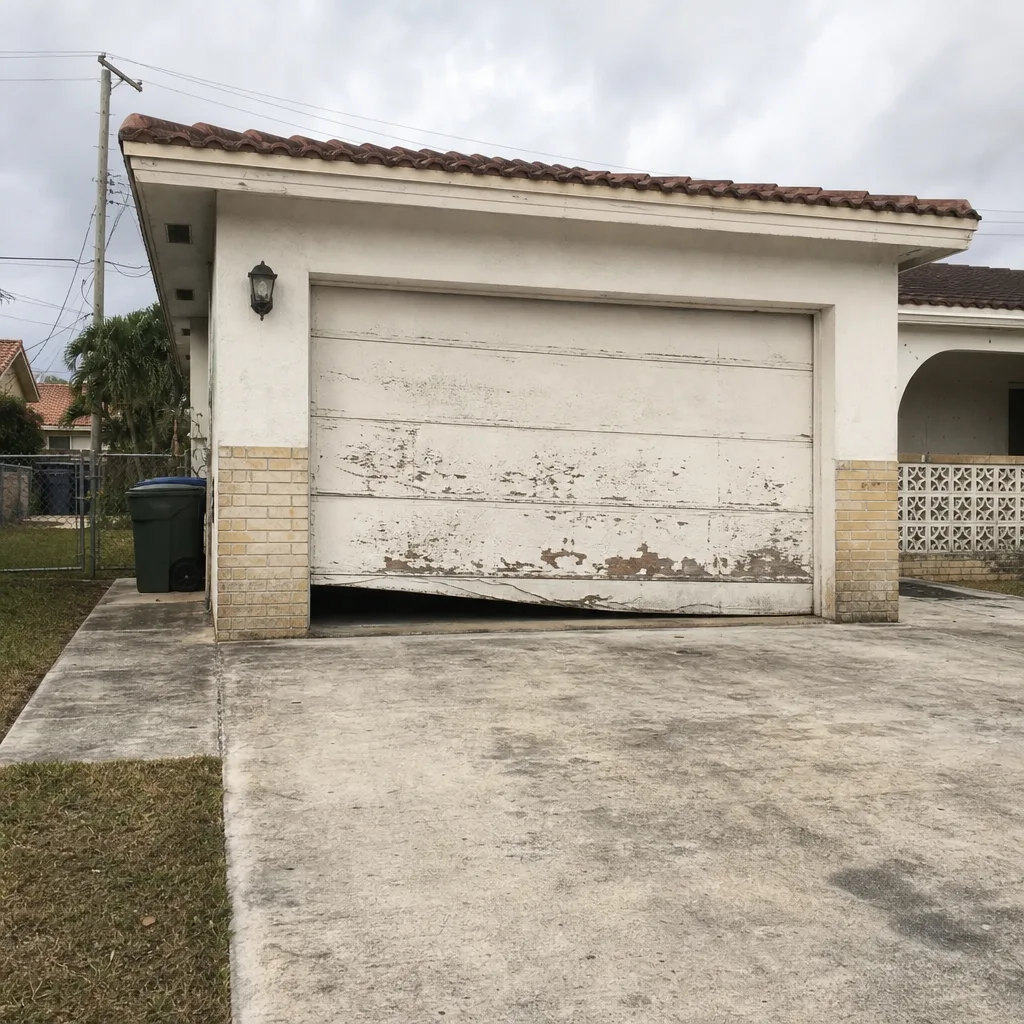 Before
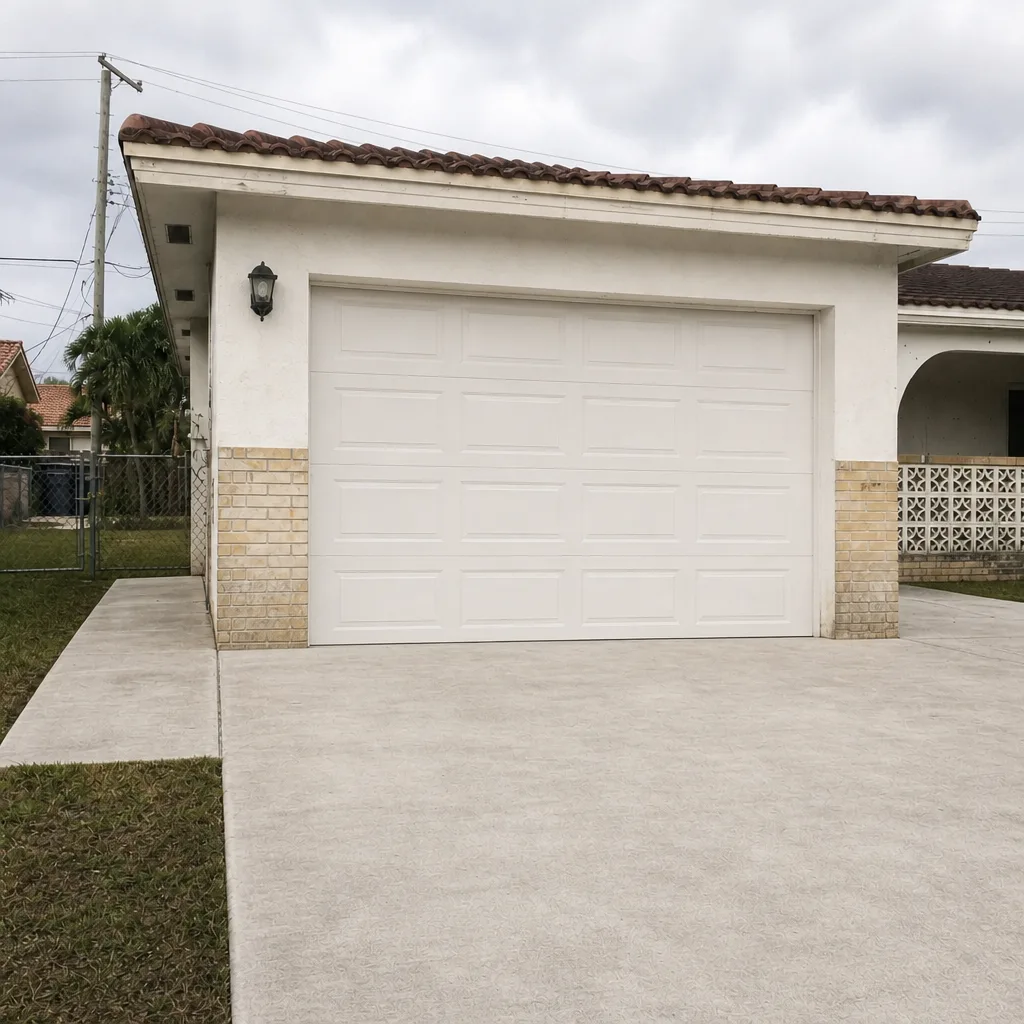 After
Common Mistakes to Avoid
- Ignoring the half-second hesitation. The pause before the door starts moving is one of the earliest signs of a spring losing tension. If it persists past a couple of months, get it checked; in Hialeah heat, it rarely resolves on its own.
- Replacing the bottom seal without checking the door’s level. An even seal change won’t fix an uneven gap caused by settling or header sag. Fix the cause before you buy the part.
- Raising the opener’s force to make it work. Turning up the force setting pushes through the resistance instead of fixing it, and it tells the safety system to ignore exactly the load it exists to detect. Find the resistance instead.
- Assuming rust is cosmetic. Surface rust on a panel is fine. Pitting on a spring or brown staining in a cable is structural, and it’s the rust that hurts people when the part releases.
- Spraying WD-40 on the tracks and calling it lubrication. It’s a solvent, not a grease, and it strips the proper lubricant while leaving the tracks dry. Dry tracks mean more friction on the opener and springs.
- Buying a new opener when the remote isn’t working. A shrinking range is usually an antenna or a re-pairing issue, not a dead unit. Diagnose before you replace.
- Touching the springs. Torsion springs are under enormous tension, and the tool that comes with a DIY kit doesn’t make the job safe. If a spring looks, sounds, or feels wrong, that’s a call to a technician, not a YouTube session. Same for cables.
When to Call a Professional
Call a professional for anything involving springs, cables, or opener safety sensors, and don’t run the door until someone has looked at it. If you’ve noted a new sound that persists for more than a few cycles, a gap at the bottom that changes with the seasons, a force drift in the opener, a rust pattern on a spring or cable, or remote range dropping over weeks, those are all worth a diagnostic visit. None of them is a reason to panic, but all of them are worth planning for. Garage Door Repair Hialeah Pros offers free estimates in Hialeah, we answer 24/7, and we dispatch Sunday through Friday, 7am to 7pm. Call (855) 337-2041. Every price is quoted and agreed before any work starts. We work on LiftMaster, Chamberlain, Genie, and Clopay systems every week, and our technicians have up to 9 years of experience.
Frequently Asked Questions
A half-second hesitation before the door starts moving, or a creaking sound that syncs with the door’s travel, is usually the first sign of spring fatigue in Hialeah. The heat shortens the spring’s service window, so what looks like minor hesitation can be the early stage of a failure. If you notice it, keep the door closed as much as possible and have it checked. Call (855) 337-2041 for an estimate; estimates are free.
We quote per job, and the written estimate sets the final price. The cost depends on the spring type, door weight, and whether you have one spring or a matched pair. A pair is usually replaced together because the second spring is on the same wear clock as the first. The price is quoted and agreed before any work begins. Call (855) 337-2041 for an exact quote; estimates are free.
Same-day and emergency service are core offerings, not an upsell. If your door is stuck and you can’t get your car out, call (855) 337-2041. We answer 24/7 and dispatch Sunday through Friday, 7am to 7pm. If you reach us outside dispatch hours, we’ll book you into the next opening.
Shrinking remote range is usually UV damage to the antenna wire or a receiver issue, not a dead opener. In a Hialeah garage, sun exposure can degrade the antenna over years, and that’s a minor fix. If the range problem comes with odd behavior from the opener (random opening, beeping, one remote dead while others work), the logic board is the more likely cause. We service both modern Wi-Fi openers and legacy systems, and we’ll tell you which fix you’re looking at. Call (855) 337-2041.
Surface rust on a door panel is cosmetic and usually harmless. Rust on a spring or a cable is different: pitting, scaling, or brown staining in the cable strands means the metal has lost structural thickness. That’s the rust that can lead to a failure. If you see it on a spring or cable, keep people clear and call for a look. Call (855) 337-2041 for an estimate.
The local professionals we connect you with are licensed and insured as required by their state, and they work on your brand. We’re fluent in LiftMaster, Chamberlain, Genie, and Clopay, along with other major residential brands. Our technicians have up to 9 years of experience. Call (855) 337-2041 for an estimate in Hialeah.
The Bottom Line
Garage door failure is not usually a surprise. It’s the end of a process you could see and hear if you knew what to look for. The half-second hesitation, the new tick or grind or creak, the uneven gap, the opener that needs more force, the rust pattern on a spring or cable, the remote that works from ten feet but not from the driveway: each one points to a specific component heading into its service window. In Hialeah’s heat, that window comes sooner than the general guidance suggests, so check your door often and keep a short log. Call (855) 337-2041 for a free estimate, We answer 24/7, and we dispatch Sunday through Friday, 7am to 7pm. Repair or replace: we’ll tell you which one actually makes sense.
Written by the team at Garage Door Repair Hialeah Pros.