
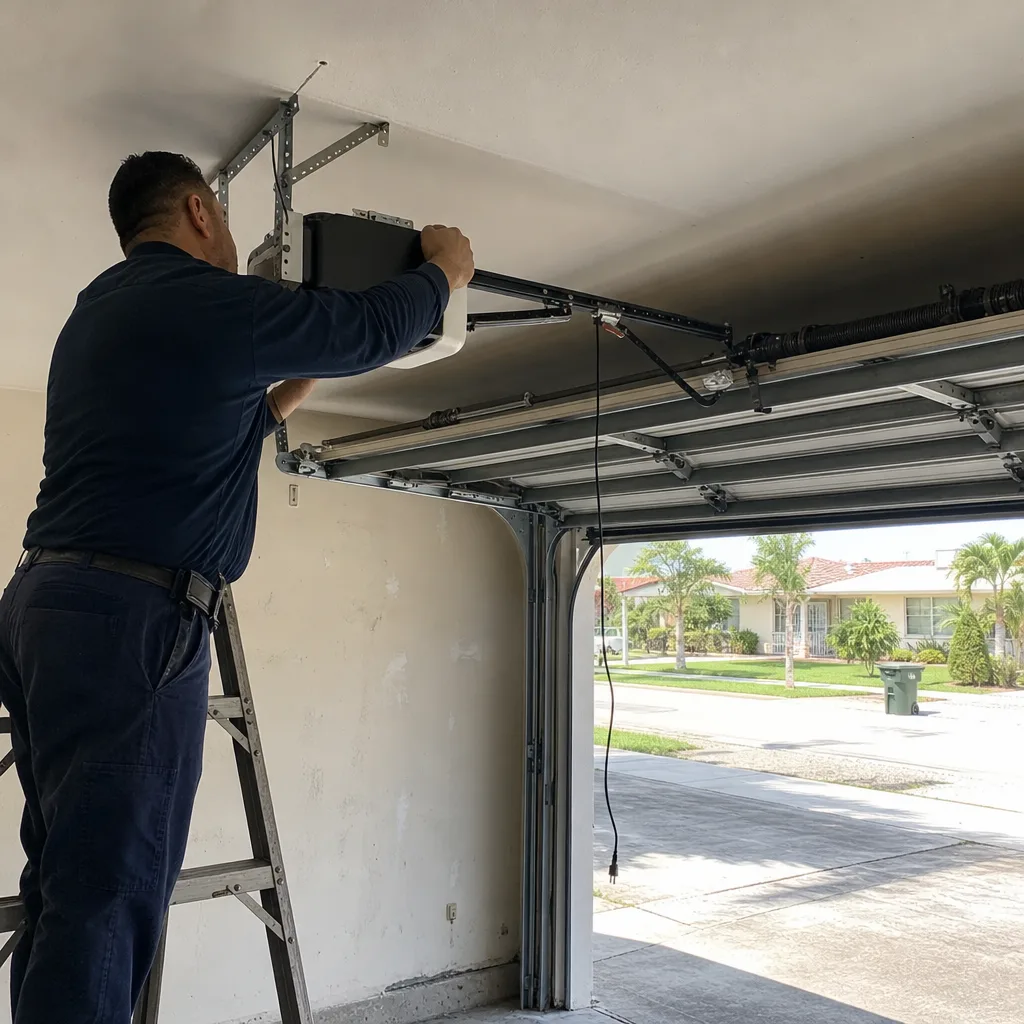
Last updated November 21, 2026
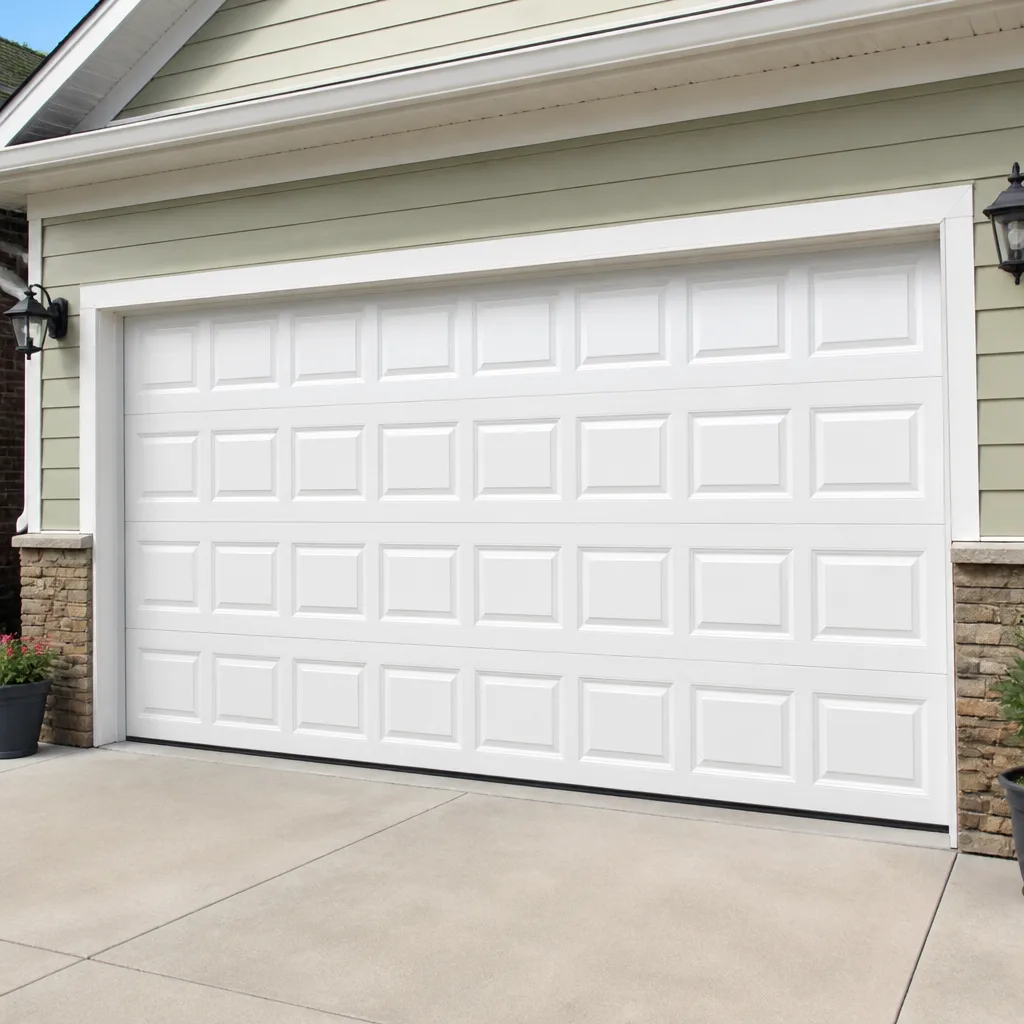 Raised-panel steel
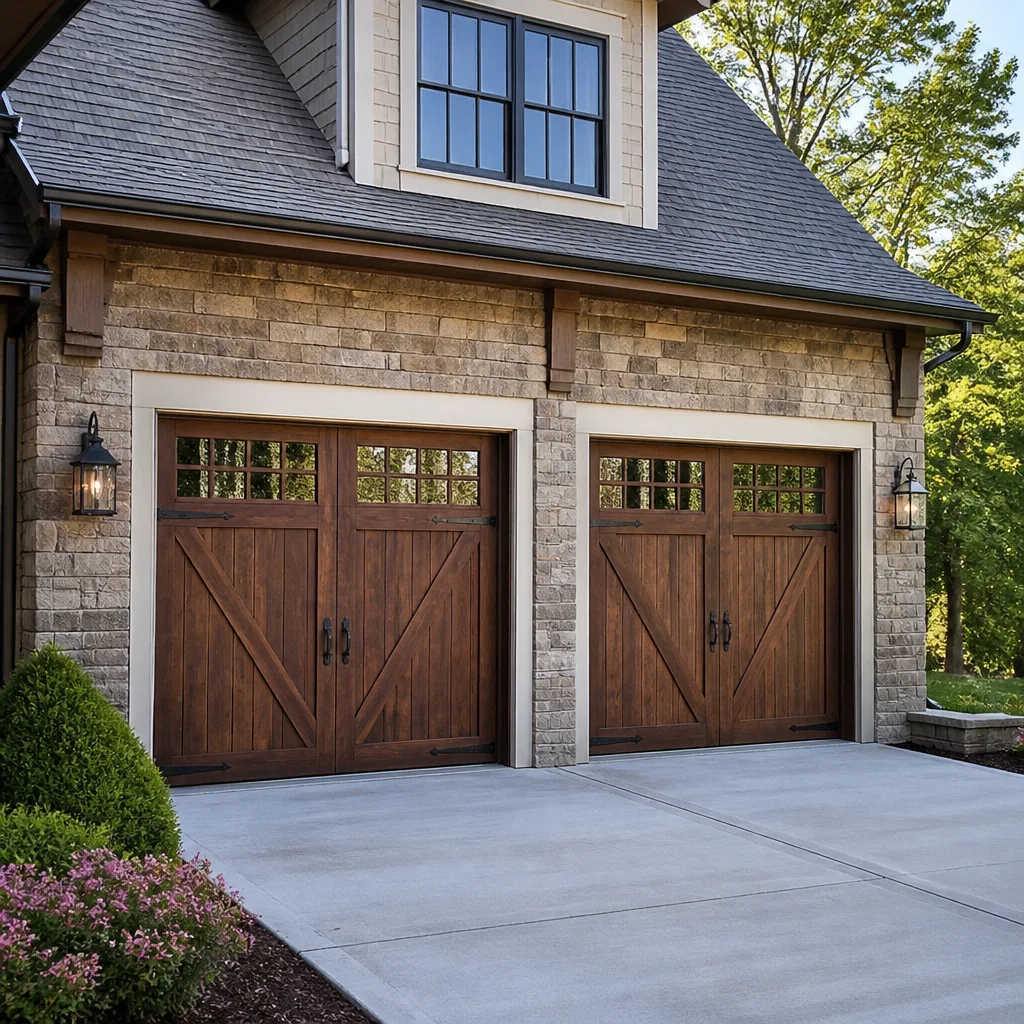 Carriage house
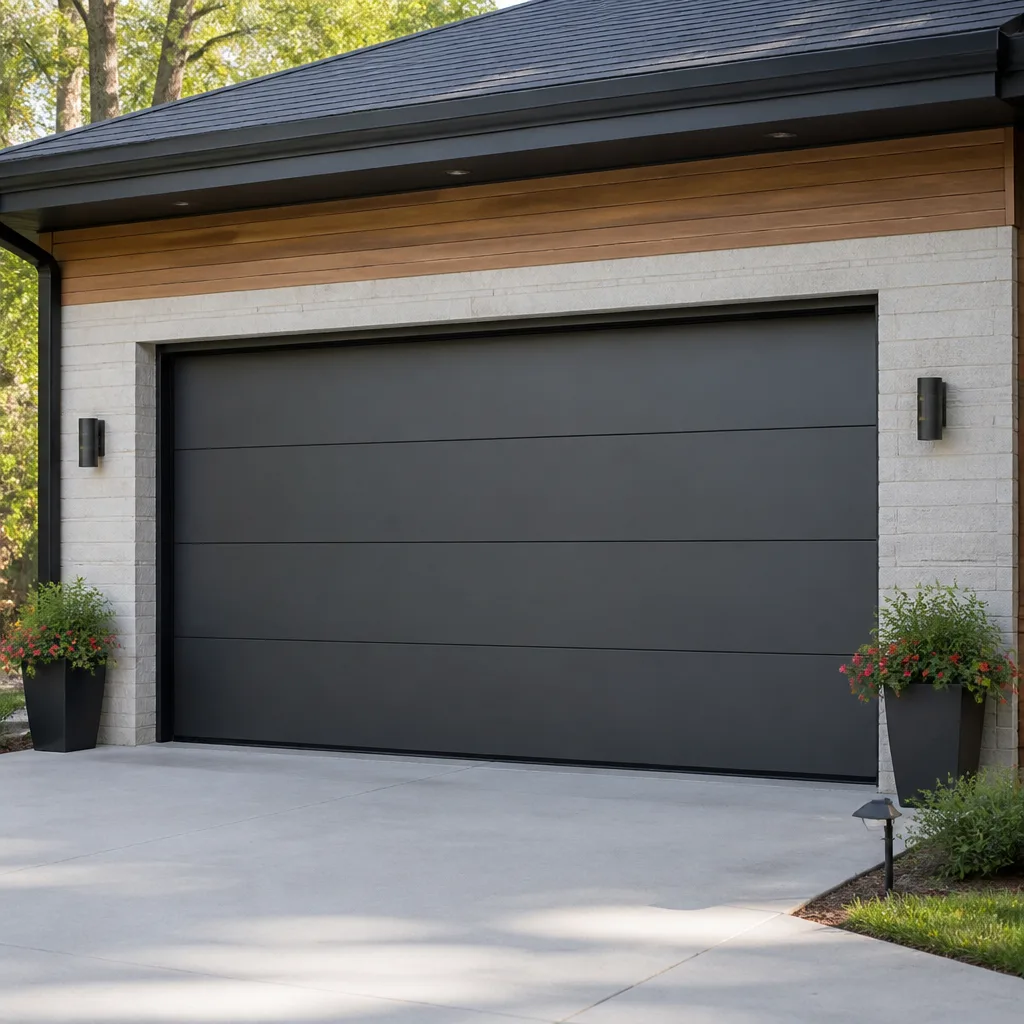 Modern flush
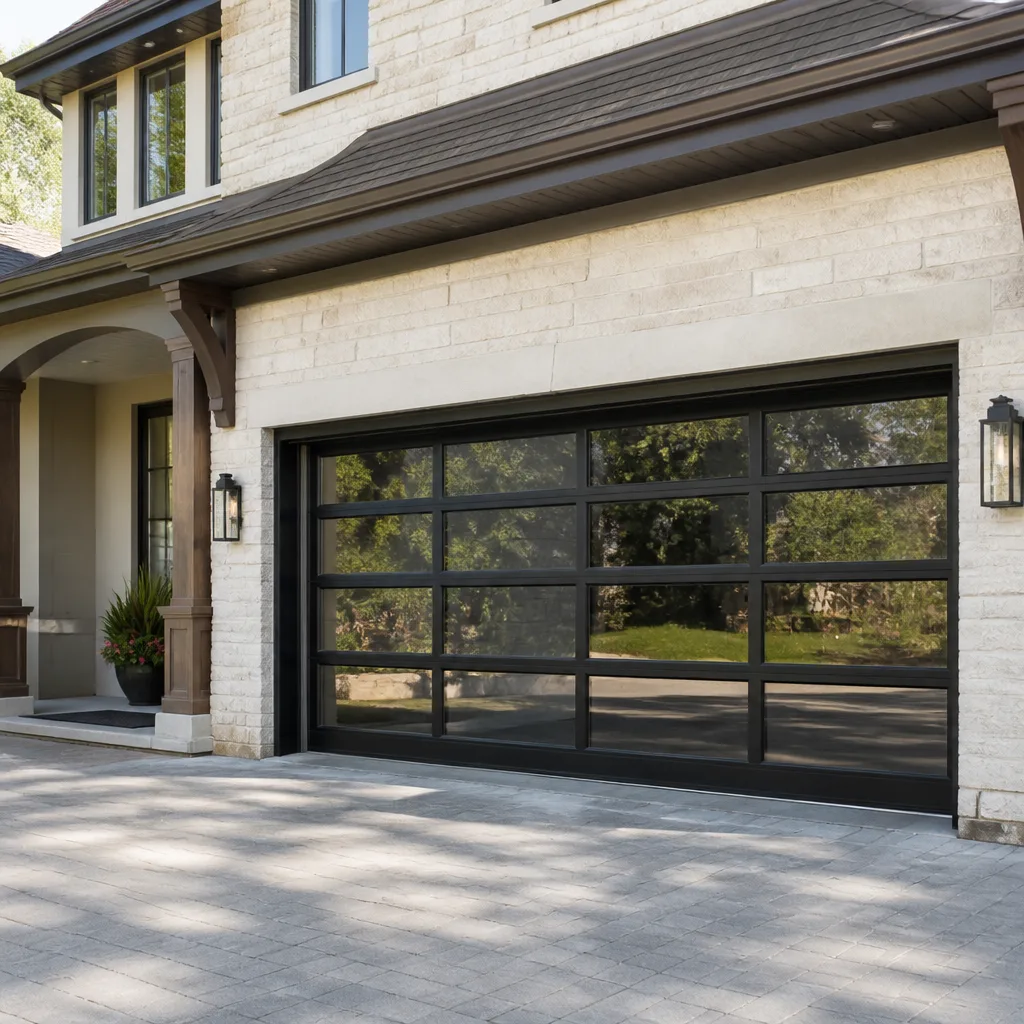 Full-view glass
 LiftMaster openers
 Chamberlain openers
Full 25-point door and opener safety check with every visit - springs, cables, rollers, tracks, and your LiftMaster or Chamberlain opener included
You get a price before we start. It does not change when the pro arrives.
Get your free estimateDIY vs Professional Garage Door: The Hialeah Homeowner’s Decision Guide
Most advice about garage doors starts with the springs. Torsion springs store enough energy to injure or kill, the reasoning goes, so call a professional. That’s true, and we’ll get to the physics. But in Hialeah, there’s a second reason that rarely makes the safety blogs: a self-installed door replacement on a primary residence runs straight into Florida’s owner-builder permit rules, and most homeowners don’t know the gray zone exists until a claim or a sale forces the issue. This guide walks through what you can legally and safely do yourself in Hialeah, what you can’t, what your insurance policy actually says about unpermitted work, and how the real cost of DIY stacks up once you count permits, tools and sourcing. No scare tactics. Just the facts you need to decide.
Quick Answer
In Hialeah, minor garage door tasks – weatherstripping, painting panels, programming a remote, aligning safety sensors – are safe and legal for a homeowner to do. Everything that touches springs, cables, or a full door replacement should go to a professional, because torsion springs store dangerous energy and a self-installed door replacement on a primary residence sits in a code gray zone that can complicate permits and insurance. When in doubt, the safe and legally clean choice is a licensed professional with a written estimate.
Styles & brands we work with
- Raised-panel steel
- Carriage house
- Modern flush
- Full-view glass
- LiftMaster openers
- Chamberlain openers
Table of Contents
- The Legal Line in Florida: What Owner-Builder Permits Actually Cover
- What Hialeah Homeowners Can Safely and Legally Do Themselves
- The Physics of Torsion Springs: Why This Isn’t Like Other Repairs
- How a Non-Permitted Replacement Affects Your Insurance
- The Honest Cost Comparison: DIY vs Professional
- Hialeah’s Climate and Humidity: What It Does to Your Door
- Brand Fluency: Why the Right Technician Knows Your System
- If You Plan to Sell: The Permit Paper Trail Matters
The Legal Line in Florida: What Owner-Builder Permits Actually Cover
Florida allows a homeowner to pull what’s called an owner-builder permit for work on a home they live in, provided they meet the statutory conditions and sign the required affidavit. That sounds like a green light for DIY door replacement. It isn’t, quite. The owner-builder exemption exists so homeowners can build or improve their own primary residence; it doesn’t automatically cover every system in the house, and a garage door is a structural opening with specific fastening, header and track requirements. Whether a given replacement qualifies depends on your city’s building department interpretation, and Hialeah has its own local amendments layered on top of the state code.
Here’s the practical version we give homeowners who call us in Hialeah with this question:
- Check with the city first. Call the Hialeah building department before you buy anything. Ask whether a garage door replacement on your specific property requires a permit, and whether an owner-builder permit applies.
- Understand what the owner-builder affidavit means. It generally certifies you’ll do the work yourself, occupy the home, and accept responsibility for code compliance. It is not a license to skip inspections.
- Don’t confuse “can I” with “may I.” Plenty of homeowners are handy enough to hang a door. The question is whether the resulting installation will pass inspection, satisfy your insurer, and survive a title search when you sell.
- Get it in writing. If any contractor tells you a permit isn’t needed, ask them to put that in writing. A responsible professional will confirm permit requirements with the city rather than guess.
The gray zone is real. Two Hialeah homeowners on similar lots can get different answers from different inspectors, because a door replacement can be classified as repair or as new construction depending on scope. That uncertainty is exactly why we tell people to nail the answer down before work starts, not after. For a task that’s clearly a repair rather than a replacement, our garage door repair team can walk you through what typically needs permitting and what doesn’t in your situation.
What Hialeah Homeowners Can Safely and Legally Do Themselves
A lot of garage door maintenance is genuinely within reach. Doing these tasks yourself keeps small problems from becoming expensive ones, and none of them require permits or put you near stored spring energy.
- Weatherstripping. The rubber or vinyl seal along the bottom and sides of the door wears out in South Florida’s heat. Replacing it is a simple, low-risk job that stops drafts, water intrusion and pests.
- Painting or refinishing panels. Scrape, prime and repaint steel or wood panels to protect them from humidity. Cosmetic work doesn’t touch the mechanics.
- Programming a remote. Adding a remote to a LiftMaster, Chamberlain or Craftsman opener is a menu-driven process in the owner’s manual. No tools, no risk.
- Aligning safety sensors. If the door reverses or refuses to close, the photo-eye sensors at the bottom of the tracks may just be misaligned or dusty. Wiping the lenses and nudging them back into line is a safe first step.
- Lubricating moving parts. A little garage-door lubricant on rollers, hinges and tracks reduces noise and wear. Keep cleaners and heavy grease off the tracks themselves.
- Testing the auto-reverse. Place a small object in the door’s path and confirm it reverses. This is a five-minute safety check worth doing periodically.
What ties these together: none of them involve the torsion spring, the cables, or the structural fastening of the door. The moment a task requires you to remove a spring, adjust a cable, or loosen the brackets holding the tracks to the wall, you’ve crossed out of DIY territory. For everything else, our Garage Door Repair Hialeah Pros team is happy to answer a quick question without trying to sell you a job.
The Physics of Torsion Springs: Why This Isn’t Like Other Repairs
Here’s why no responsible guide tells you to replace your own torsion spring, and it isn’t marketing. A torsion spring is a wound steel coil that stores energy to counterbalance the door’s weight. On a typical single-car door that weighs a few hundred pounds, that spring is wound to hold the door at balance points, and the stored energy in a fully tensioned spring can be enormous. A standard double-car door weighs considerably more, and its springs store proportionally more energy. When a spring is released without the winding bars and control a technician uses, that energy goes somewhere, and it goes fast.
The reason this is different from, say, replacing a faucet cartridge is mechanical and unforgiving:
- Stored energy, not just weight. The spring is compressed energy, not a heavy object. A heavy object you can lift slowly. A released spring unloads instantly, and a slipping winding bar can whip or drop with no warning.
- The door stays under tension. A torsion system is under load even when the door is closed. There’s no “safe position” for a homeowner to work from.
- One small error is catastrophic. Missing a single winding turn, using the wrong bar, or losing grip on a bar can be enough. There’s no partial-credit outcome.
We’ve seen the aftermath in Hialeah. People who take this on once and vow never to do it again, and too often it’s a hospital visit that taught the lesson. Springs aren’t a DIY task in the same category as hanging a shelf. They’re a task where the margin for error is measured in milliseconds. That’s why garage door spring repair is offered as a dedicated, trained service rather than folded into general handyman work. The right call is to have a technician handle it, and to treat any spring that looks stretched, gapped or wet with rust as a call-now situation rather than a project.
How a Non-Permitted Replacement Affects Your Insurance
A garage door replacement that never got permitted can become an expensive problem at claim time, because homeowner policies generally require that improvements and modifications to the dwelling be done according to code and disclosed. When wind or storm damage prompts a claim, an adjuster looks at what’s there. If the door was replaced without a permit or inspection, the insurer can raise questions about the modification, and depending on your policy’s language, that can complicate how the claim is handled. We’re not insurers and won’t pretend to read your policy for you. But we will tell you plainly: an unpermitted improvement is exactly the kind of detail that turns a straightforward claim into a dispute.
The practical safeguards:
- Keep the permit paperwork and any inspection record in your home files.
- Keep the written estimate and invoice showing who did the work and what was installed.
- If you already have an unpermitted door, ask your insurer what documentation they’d need, or talk to a contractor about retroactively confirming code compliance where possible.
- Before your next replacement, confirm permit requirements with the city and have any contractor handle it properly.
Hialeah homes sit in a storm-prone region, and wind is a real consideration for door strength and anchoring. That’s the bigger insurance story than most DIY guides tell: the door is part of your home’s envelope, and how it’s anchored and permitted is part of how your home is protected. For opener and mechanical work that doesn’t alter the structure, our garage door opener repair team keeps the paper trail clean and the work documented.
The Honest Cost Comparison: DIY vs Professional
The DIY pitch almost always compares the price of a door kit to the price of a full professional job. That’s not a fair comparison, because the true DIY cost includes items the brochure never lists. Here’s the honest breakdown of what a self-installed replacement actually involves against having a professional do it, using estimates rather than one advertised price. Exact figures depend on door size, material and opener, so we treat all numbers as typical ranges and confirm with a written estimate.
| Line item | DIY path | Professional path |
|---|---|---|
| Door unit | You buy retail or online; freight and delivery often extra | Sourced by the installer, delivered to your site |
| Permit | You handle it (if a permit is required) | Handled for you with the city |
| Tools | Winding bars, ladders, impact driver, hardware; some may need rental | Included in the labor |
| Labor | Your time and risk | Included; work done and verified |
| Warranty | On parts only, void if installed incorrectly | On parts and labor |
| Inspection / code | Your responsibility | Handled by the installing professional |
On a spring or opener repair, the tool and permit factors shrink, and so does the case for DIY. A spring replacement involves specialized, high-tension work; an opener repair on a legacy Craftsman or an older LiftMaster involves brand-specific diagnosis. The honest conclusion: for a full replacement, once permits, delivery, tools and the warranty gap are counted, the professional path is often the more economical one, and it’s the one that leaves a clean paper trail. For a light repair, DIY the simple stuff and call for the rest. Our technicians have up to 9 years of experience, and our estimates are free so you can compare the numbers before you decide.
Hialeah’s Climate and Humidity: What It Does to Your Door
South Florida’s heat and humidity are hard on garage door systems, and a lot of DIY damage we diagnose in Hialeah traces back to a homeowner fighting the climate instead of working with it. Humidity warps wood panels and swells them until they bind in the tracks. It rusts hardware and springs faster than homeowners in drier regions expect, so a spring that looks fine can be hiding thinning coils. And the sun beating on a west-facing door all afternoon makes metal panels hot to the touch and drives paint failure along the bottom and edges.
That climate reality should shape your decision like this:
- Rust watch. Inspect springs and cables for rust annually. Rusted springs weaken and are a repair-risk long before they break.
- Paint and seal early. In this climate, touching up paint and replacing weatherstripping are cheap, high-payoff DIY tasks. Water gets in through failed seals.
- Don’t fight humidity with more torque. If the door drags, the fix is usually rollers, hinges or track adjustment, not a larger opener motor. Crooked adjusting on a humidity-swollen door is a common DIY mistake.
- Leave panel straightening to the pros. Warped or sagging panels that need realignment are a structural and spring-related job.
Hialeah homes are close together, so a door that’s noisy or misadjusted affects neighbors too. Getting the maintenance right early is the cheaper path.
Brand Fluency: Why the Right Technician Knows Your System
Garage door openers aren’t all alike under the cover. A LiftMaster logic board, a Chamberlain Wi-Fi unit, a Genie legacy motor and a Craftsman system each have their own diagnostics, force settings and travel limits. A generalist with a generic tool kit can often get the door to move, but the right fix depends on knowing the system. That’s why brand fluency matters to the DIY-versus-professional decision: if you own one of the industry’s leading brands, a specialist who knows it saves you the guesswork that a homeowner working from a video doesn’t have. Our technicians work across LiftMaster, Chamberlain, Genie, Clopay, Amarr, Wayne Dalton, Craftsman and Raynor, meaning we work with the actual components and logic of each system rather than a one-size-fits-all workaround.
For a homeowner deciding whether to DIY, the practical test is simple:
- Does your task involve the opener’s programming or internal parts? Brand knowledge strongly favors a pro.
- Is the door a Wayne Dalton or Raynor model with manufacturer-specific hardware? Parts compatibility matters.
- Are you troubleshooting a legacy unit that most installers decline to touch? A specialist is likely your only good option.
We’re a single-trade shop. Every technician’s skill set is built around garage doors, not around general remodeling, so the diagnosis is grounded rather than experimental. That’s the kind of clarity that makes the DIY decision easier.
If You Plan to Sell: The Permit Paper Trail Matters
Hialeah is a city of homeowners who move. If you’re planning to sell in the next few years, the DIY question has a second layer: what happens at inspection and closing. A buyer’s inspector will look at the garage door, and a door that was self-installed without a permit can show up as an unpermitted improvement in a title or permit search. Some buyers walk away from that. Others use it to renegotiate. Either way, the missing permit becomes a cost. That’s another reason the DIY savings comparison from earlier understates the professional path’s value: the professional leaves a documented trail that pays off when the house changes hands.
The clean-path checklist for anything but minor maintenance:
- Confirm permit requirements with the city before work begins.
- Keep the permit, inspection record, estimate and invoice.
- Use a licensed, insured professional whose work you can point to in a file.
In our experience across Hialeah, the homeowners who avoid trouble are the ones who treat paperwork as part of the job, not an afterthought. Repair or replace, we’ll tell you which one actually makes sense, and we’ll help you keep the record straight.
Common Mistakes to Avoid
- Replacing a spring yourself. It’s the single most dangerous DIY choice on a garage door. The stored energy in a torsion spring can injure or kill, and there’s no room for a learning curve.
- Assuming a permit isn’t needed. In Hialeah, confirm with the building department before work starts. Guessing wrong is how an unpermitted door ends up on a title search.
- Buying a door before checking compatibility. A door-sized kit from a big-box store won’t always fit your opening or match your hardware, and returns can be a hassle. Measure twice, verify the model.
- Fighting a humidity-dragging door with the opener. Turning up the force setting masks a track or roller problem and accelerates wear. Fix the cause, not the symptom.
- Ignoring rust in this climate. Hialeah’s humidity rusts springs and cables faster than dry-region guides assume. Check them annually and treat rust as a warning sign.
- Skipping the paper trail. No permit, no invoice, no warranty. When you sell or file a claim, the missing documents cost more than the paperwork ever would.
- Calling a generalist for a brand-specific opener. A LiftMaster, Chamberlain or legacy Craftsman unit needs someone who knows its logic, or the fix becomes trial and error.
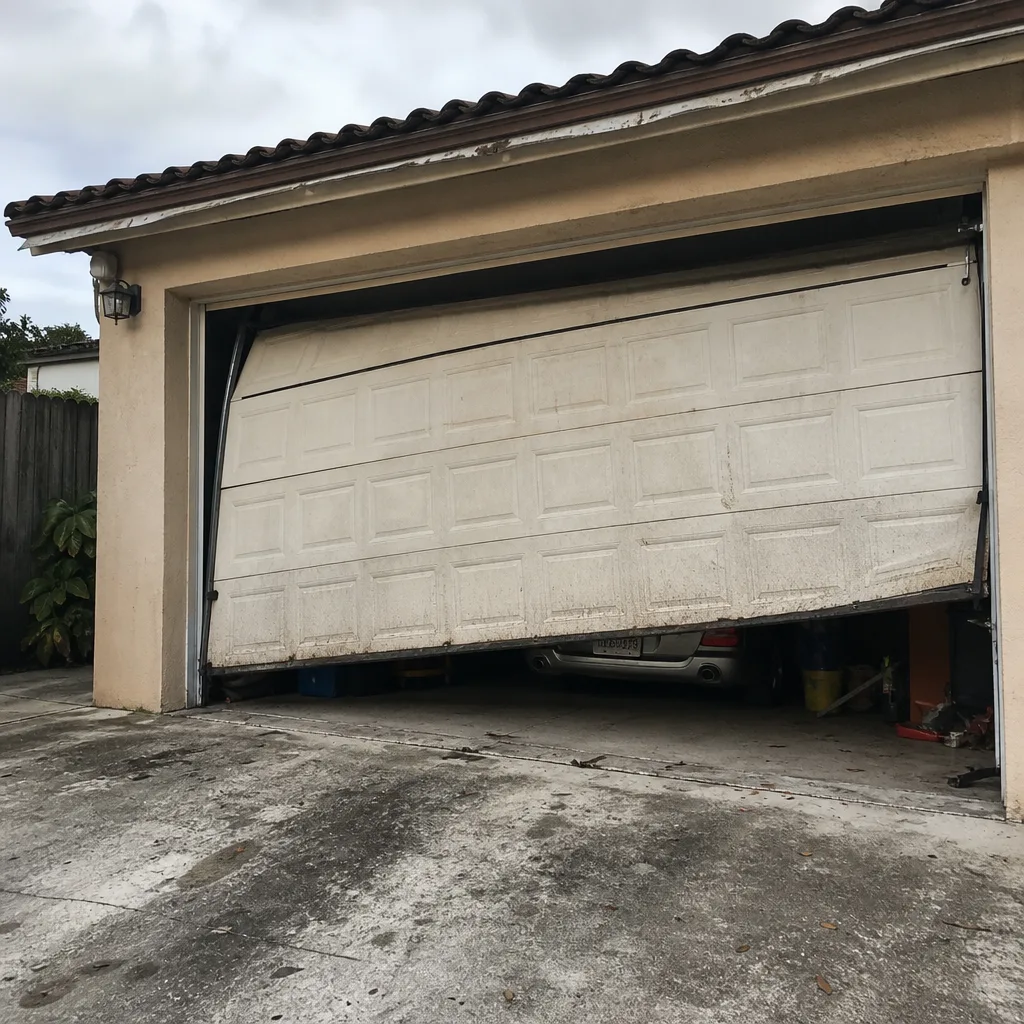
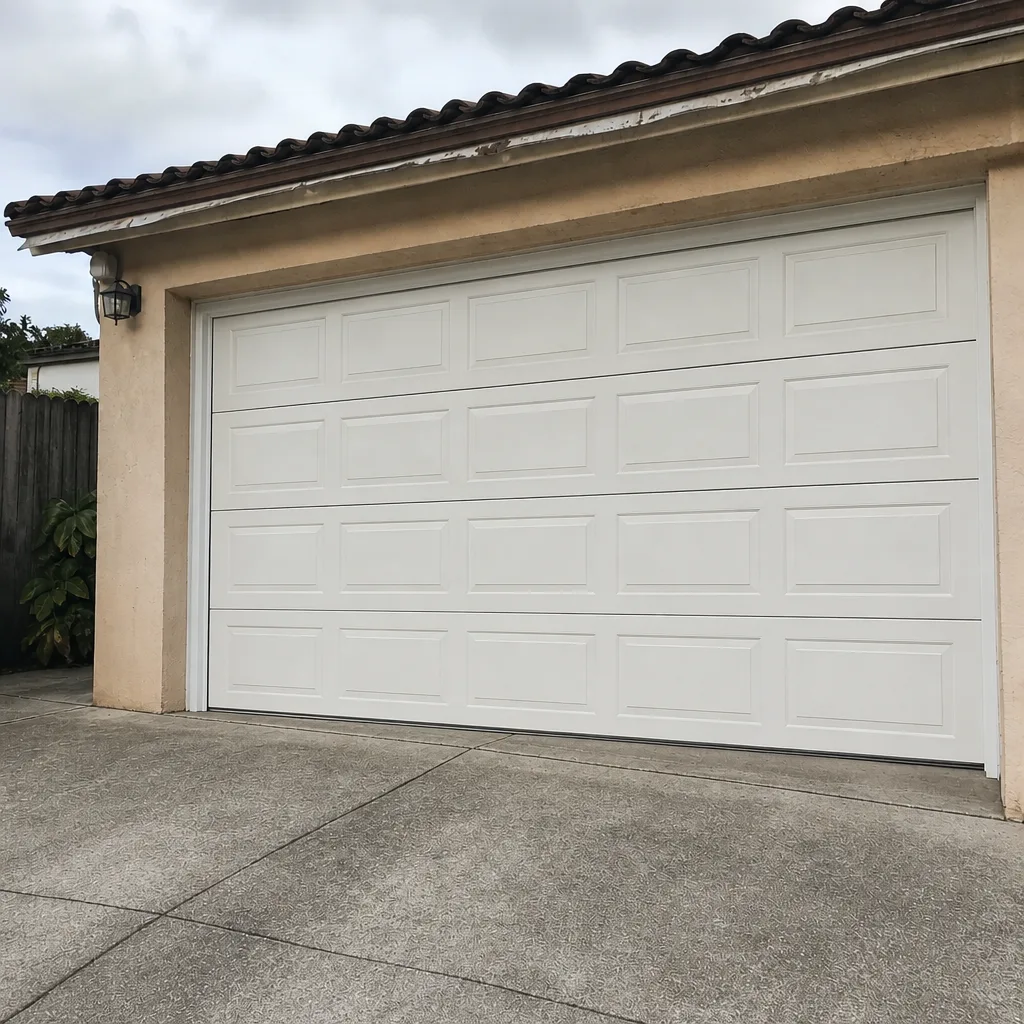
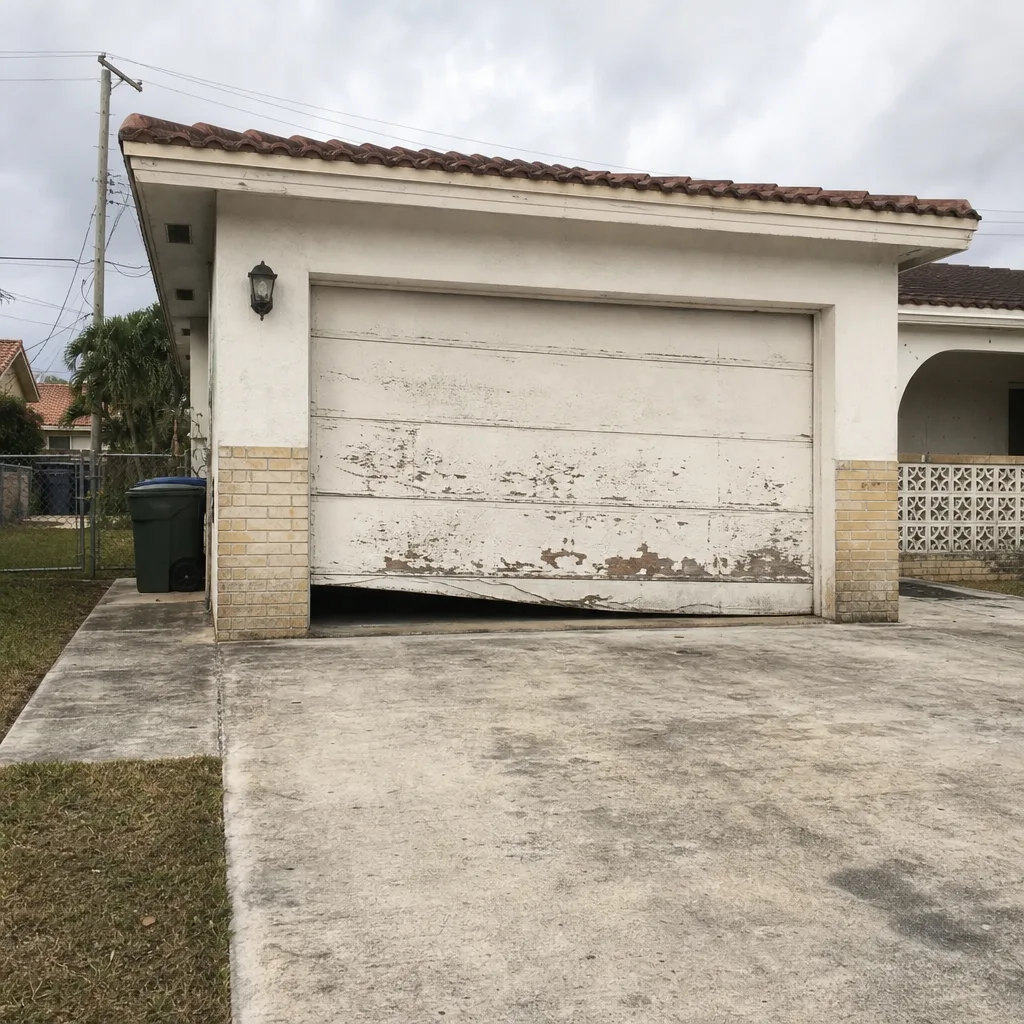
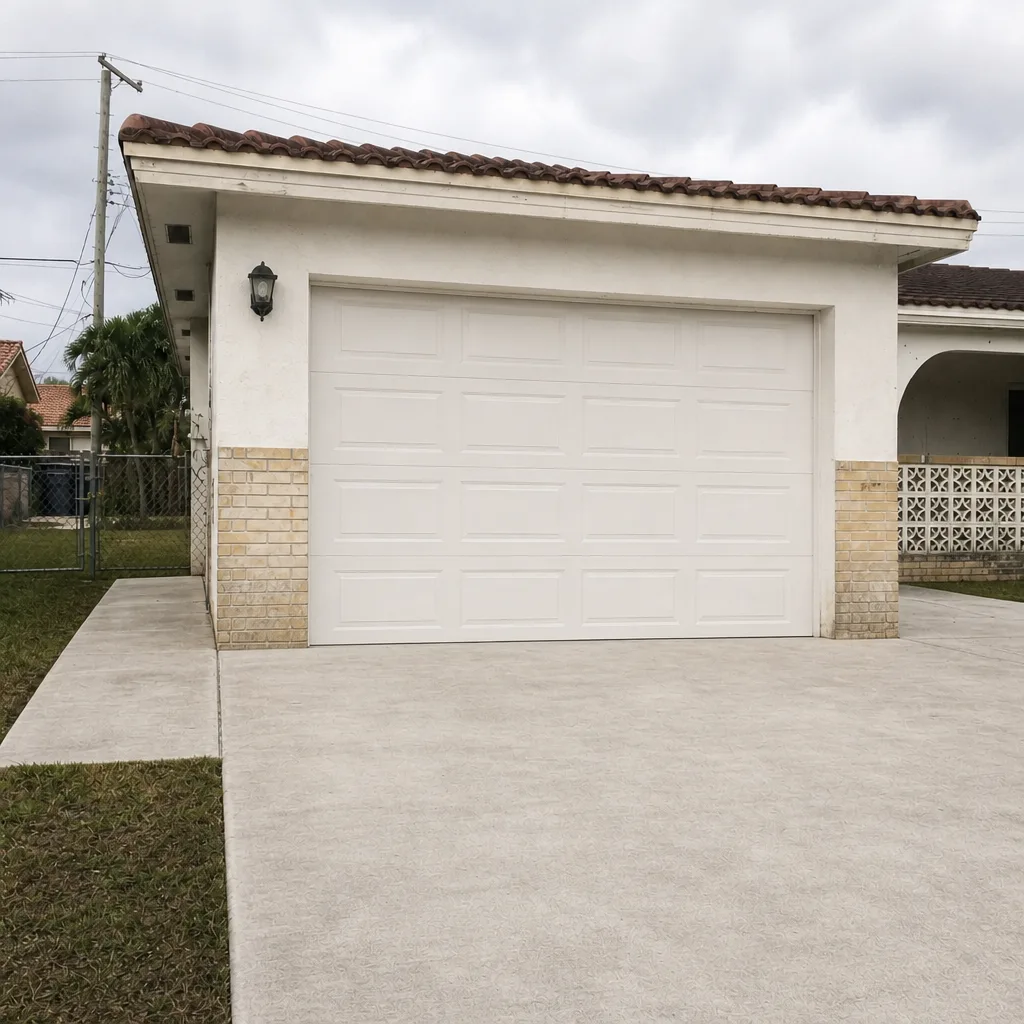
See the difference
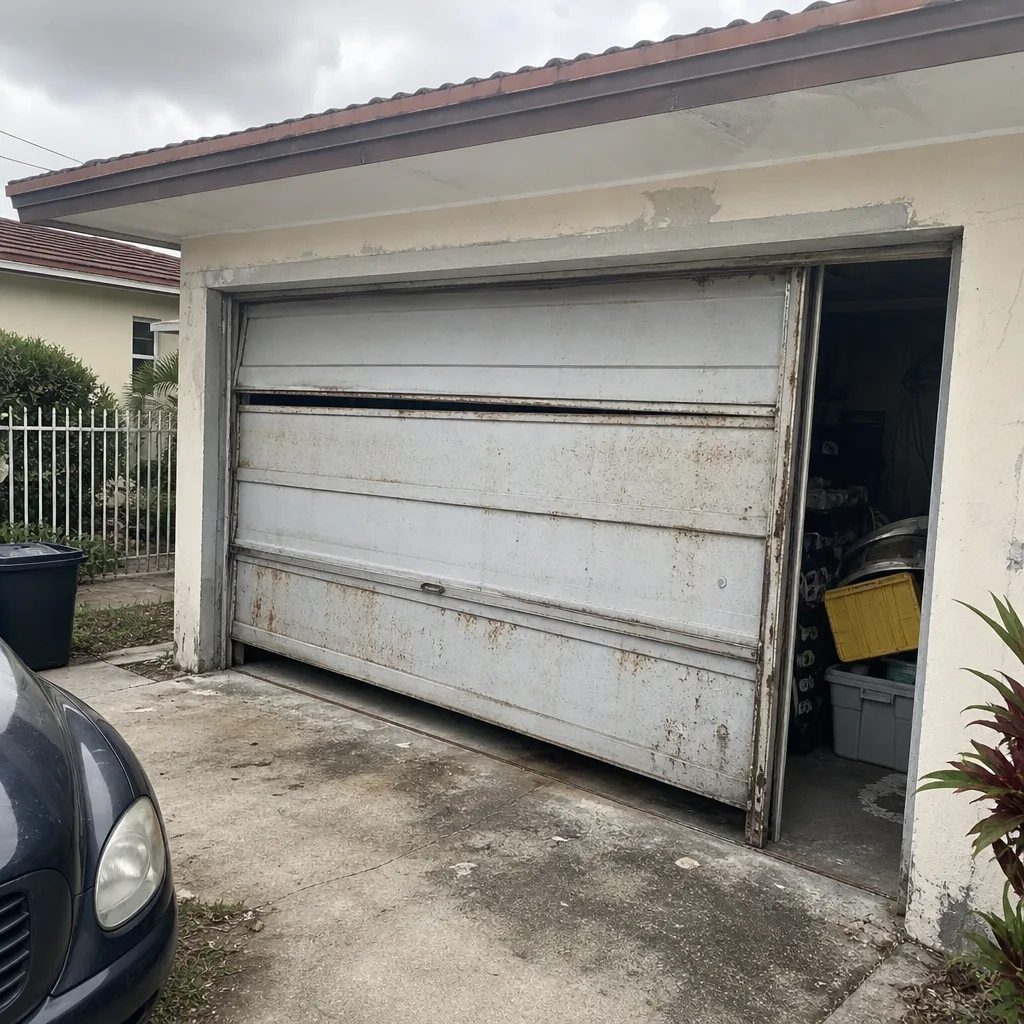 Before
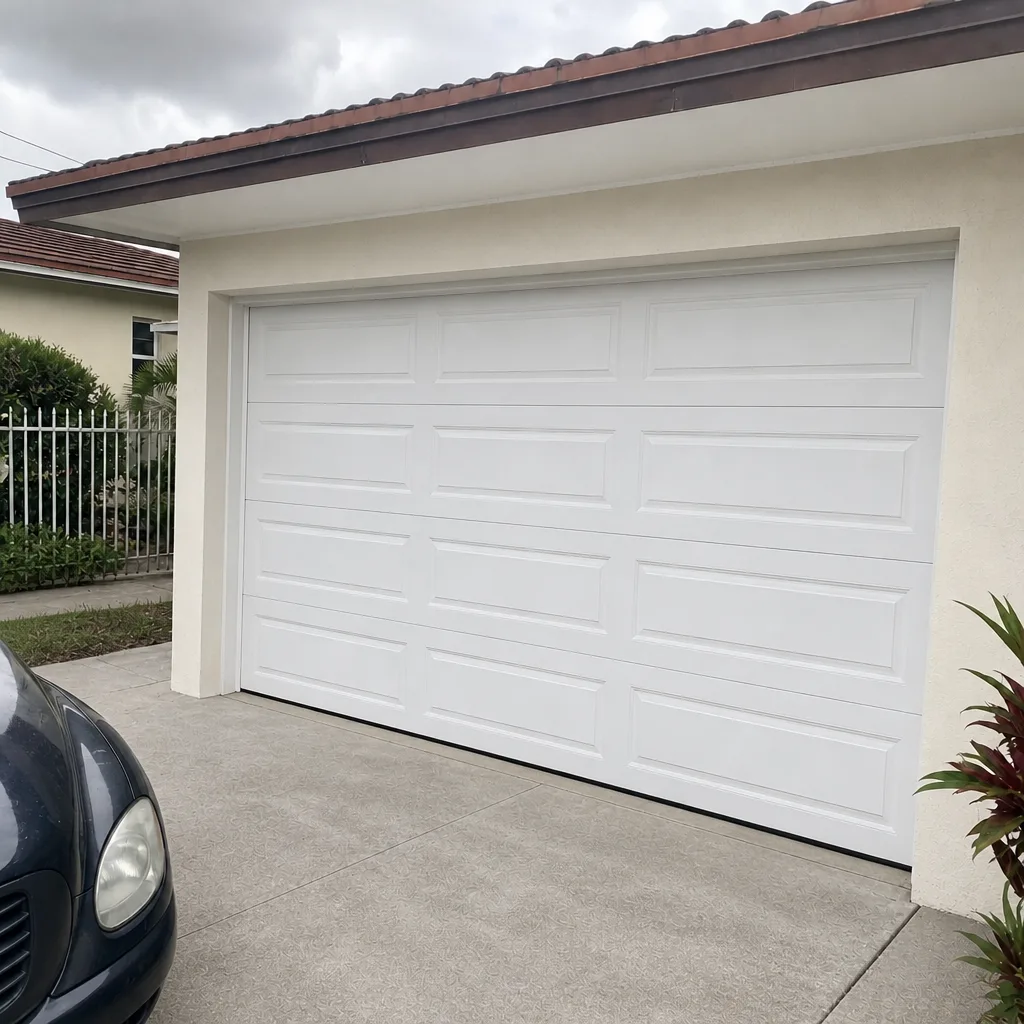 After
 Before
 After
 Before
 After
When to Call a Professional
Call a professional whenever the job touches springs, cables, panels, tracks or a full replacement. Also call when the door won’t open or close, when it reverses randomly, when a spring visibly sags or rusts through, or when you realize you’ve been watching a video and thinking “this looks okay” about a task under tension. Those are the moments to stop. For everything else, the safe DIY list earlier in this guide is yours. If you’re planning a replacement or it’s a mechanical repair, a professional’s free estimate gives you a real number to compare against the DIY total before you commit. In Hialeah, Garage Door Repair Hialeah Pros offers free estimates in Hialeah – call (855) 337-2041. We answer 24/7. Fast dispatch from 7am to 7pm, Sunday through Friday.
Frequently Asked Questions
It depends. Florida allows owner-builder permits for work on a primary residence, but whether a garage door replacement falls under that exemption, and what Hialeah’s building department requires, is a question you should ask the city before you buy. We always recommend confirming with the building department and keeping any permit and inspection records.
No. Torsion springs store enormous energy, and a single slip with a winding bar can cause serious injury. Springs aren’t a DIY task. The safe path is a trained technician, and our spring service is dedicated work by specialists who handle it correctly. Call (855) 337-2041 for help.
Weatherstripping, painting panels, programming a remote, aligning safety sensors, lubricating moving parts, and testing the auto-reverse are all safe for most homeowners in Hialeah. Anything that touches the springs, cables or the structural fastening of the door is professional work.
A claim can become complicated when an improvement wasn’t permitted, because homeowner policies generally require code-compliant work and disclosure. We can’t interpret your policy, but we do know that unpermitted work becomes a question at claim time. Talk to your insurer, and if you’re doing a replacement, confirm permits and keep documentation.
It isn’t automatically one. A door replacement can be classified differently depending on scope, and a primary residence may or may not qualify for an owner-builder permit. That gray zone is exactly why we tell Hialeah homeowners to ask the building department first and get the answer in writing.
A professional job includes the actual diagnosis, the right parts for your brand, the permit and inspection handling where needed, the installation, and a warranty on parts and labor. That’s the part homeowners often forget when they compare a kit price to a full-service quote. We work with LiftMaster, Chamberlain, Genie, Clopay, Amarr, Wayne Dalton, Craftsman and Raynor. Our estimates are free.
The Bottom Line
In Hialeah, the DIY versus professional question isn’t mainly about how handy you are. It’s about stored spring energy you shouldn’t tangle with, and a Florida permit gray zone most homeowners don’t know exists. Do the safe, legal tasks yourself: weatherstripping, paint, remote programming, sensor alignment. Leave the springs, cables, and full replacements to a trained professional. For a replacement, count permits, tools, delivery and the warranty gap in your cost comparison; the professional path is often the honest bargain. Whatever you decide, keep the paperwork. If you want a real number to compare against, our garage door repair team is one call away.
Contact Us
If you’re still weighing DIY against a professional job in Hialeah, call us and we’ll give you a straight answer, even if the answer is “you can handle that yourself.” We offer free estimates and upfront pricing, and the written estimate sets the final price before any work starts. Call (855) 337-2041. We answer 24/7. Fast dispatch from 7am to 7pm, Sunday through Friday.
Written by the team at Garage Door Repair Hialeah Pros.